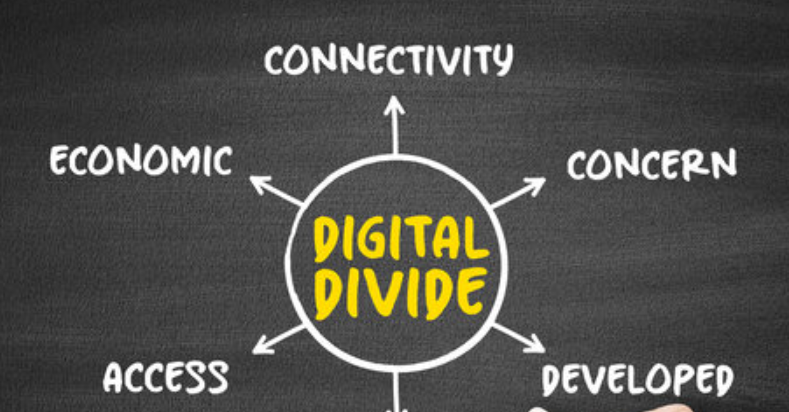
In an era where connectivity is the undisputed lifeblood of the global economy, millions of Indonesians still find themselves standing on the wrong side of the digital divide. For urban dwellers in major metropolitan hubs, high-speed broadband is as ubiquitous as the air they breathe—a seamless utility powering everything from enterprise cloud solutions to remote education. However, for communities residing in Indonesia’s 3T regions (Terdepan, Terluar, Tertinggal—Frontier, Outermost, and Disadvantaged), the internet often remains a distant mirage. Tackling these vast connectivity gaps, commonly referred to as “blank spots,” requires significantly more than just political rhetoric. It demands massive capital investment, complex logistical execution, and cutting-edge technological deployment. To overcome these monumental infrastructure hurdles, leveraging collaborative frameworks such as a public private partnership has proven essential in accelerating the deployment of telecommunications networks across some of the world’s most challenging terrains.
The Reality of the Digital Divide in Indonesia
Indonesia boasts one of the fastest-growing digital economies in Southeast Asia. According to the Indonesian Internet Service Providers Association (APJII) report for 2024, the national internet penetration rate has impressively reached nearly 79.5%. Yet, this aggregate figure masks a stark regional disparity. While the island of Java enjoys highly concentrated and robust infrastructure, eastern regions and remote islands continue to struggle with intermittent or entirely non-existent cellular coverage.
The Ministry of Communication and Informatics (Kominfo) consistently highlights that thousands of rural villages still lack reliable 4G cellular signals. In these 3T areas, geographical barriers stand like stubborn sentinels, fiercely guarding the isolation of rural communities. Dense rainforests, rugged mountain ranges, and the sheer fragmentation of an archipelago comprising over 17,000 islands make the physical laying of fiber optic cables a logistical nightmare.
Why Traditional Commercial Financing Falls Short
To understand how to fix the problem, we must first understand why the market hasn’t solved it organically. Telecommunications companies (Telcos) operate on commercial viability. When evaluating a potential network expansion, they calculate the Capital Expenditure (CAPEX) required to build the infrastructure and the Operating Expenditure (OPEX) needed to maintain it against the projected Average Revenue Per User (ARPU).
In 3T regions, this financial equation breaks down entirely. The CAPEX skyrockets due to the immense difficulty of transporting heavy materials—such as Base Transceiver Station (BTS) towers and generators—by helicopter or small boats. Furthermore, OPEX remains perpetually high because many of these remote sites lack access to the national electricity grid (PLN), forcing operators to rely on expensive diesel fuel for generators. Conversely, the ARPU in these regions is typically very low due to sparse populations and lower average income levels. Therefore, relying solely on traditional corporate funding mechanisms is a fundamentally flawed strategy for eliminating blank spots.
Historical Case Study: The Palapa Ring Milestone
Recognizing the limitations of purely private enterprise in rural connectivity, the Indonesian government sought alternative methods to share the financial burden and mitigate construction risks. This paradigm shift led to one of the most ambitious telecommunications infrastructure projects in the nation’s history.
The Palapa Ring project stands as tangible proof of the success of a backbone network based on a public private partnership. Divided into three massive packages (West, Central, and East), this initiative deployed over 35,000 kilometers of terrestrial and submarine fiber optic cables, effectively creating an internet toll road that connects all regencies and cities across the archipelago. By utilizing this collaborative financing model, the government provided availability payments that guaranteed a return on investment for the private consortiums building and operating the network. This strategic risk-sharing model successfully transformed a commercially unviable mega-project into a highly attractive infrastructure asset, significantly lowering the barrier to entry for retail internet service providers to finally enter the eastern Indonesian market.
Technological Innovations to Eradicate Blank Spots
While backbone networks like the Palapa Ring provide the crucial underlying foundation, delivering the internet to the actual end-user—the “last mile” connectivity—requires targeted technological innovations tailored for 3T topographies.
1. High-Throughput Satellites (HTS) and LEO Technology
When laying fiber optics across deep ocean trenches or mountainous jungles proves impossible, the sky offers the most viable solution. The recent launch of the SATRIA-1 (Satelit Republik Indonesia) represents a monumental leap forward. With a massive capacity of 150 Gbps, this Very High-Throughput Satellite is specifically designed to beam direct connectivity to over 150,000 public facilities, including rural schools, regional hospitals, and local government offices in 3T areas.
Furthermore, the introduction of Low Earth Orbit (LEO) satellite constellations, such as Starlink, is revolutionizing latency and bandwidth capabilities. Because LEO satellites orbit much closer to the earth than traditional Geostationary (GEO) satellites, they provide fiber-like speeds that can instantly bridge the gap for isolated villages.
2. Hybrid Solar-Powered Base Transceiver Stations (BTS)
Electricity remains one of the largest bottlenecks for continuous internet access. To combat this, telecommunications providers and the government are increasingly deploying hybrid BTS towers powered primarily by solar panels and lithium-ion battery banks, with diesel generators serving only as a last-resort backup. This transition to renewable energy drastically reduces the OPEX associated with fuel logistics and minimizes the carbon footprint of digital expansion.
3. Microwave Links and Community-Based Networks
In hilly terrains where continuous cable laying is physically unfeasible, microwave transmission links act as invisible bridges, beaming high-capacity data from one peak to another. Once the signal reaches a remote village, local governments can utilize Community-Based Networks (often referred to as RT/RW Net). By empowering Village-Owned Enterprises (BUMDes) to manage the local Wi-Fi distribution, the community not only gains access to information but also creates a self-sustaining micro-economy that keeps maintenance revenues localized.
The Strategic Role of Universal Service Obligation (USO)
Technology alone cannot function without a sustainable funding ecosystem. This is where the Universal Service Obligation (USO) plays a pivotal role. In Indonesia, telecommunications operators are mandated to contribute a specific percentage of their gross revenue to a USO fund, which is managed by BAKTI (Badan Aksesibilitas Telekomunikasi dan Informasi).
BAKTI pools these funds to subsidize the construction of BTS towers in commercially dead zones. This policy ensures that the highly profitable urban markets effectively cross-subsidize the development of unprofitable rural areas. When orchestrated transparently, USO funds act as the financial engine that drives the physical hardware into the deepest corners of the country.
Future Outlook: Building a Sustainable Digital Ecosystem
Closing the internet blank spots is not merely about erecting steel towers and launching satellites; it is fundamentally about human capital. According to World Bank studies, a 10% increase in broadband penetration can yield up to a 1.38% increase in GDP growth in developing economies. However, this economic uplift only materializes if physical connectivity is paired with aggressive digital literacy campaigns.
Once a 3T region comes online, the focus must immediately shift toward educating the population on how to leverage this new tool. From utilizing e-commerce platforms to sell local agricultural products globally, to accessing telemedicine and remote learning, the internet must be positioned as a tool for socio-economic empowerment rather than just a medium for social media consumption.
Conclusion
Eradicating internet blank spots in Indonesia’s 3T regions is a complex, multi-dimensional challenge that demands a symphony of innovative technology, progressive regulatory policies, and robust financial structuring. From the deployment of LEO satellites to the strategic utilization of USO funds, the pathways to a fully connected archipelago are clear but require meticulous execution. The historic success of backbone infrastructures proves that when the public and private sectors align their interests, geographical barriers can be conquered.
Executing these massive infrastructure developments requires airtight risk management, feasibility structuring, and innovative financing guarantees. If your organization is looking to participate in national infrastructure projects and needs an expert partner to ensure financial viability and risk mitigation, we encourage you to collaborate with PT PII. Let us help you structure projects that not only deliver solid returns but also drive impactful socio-economic growth across Indonesia.
About the Author